30 Years Baptized, 55 Years Old
In 2026 I am turning fifty-five years old.
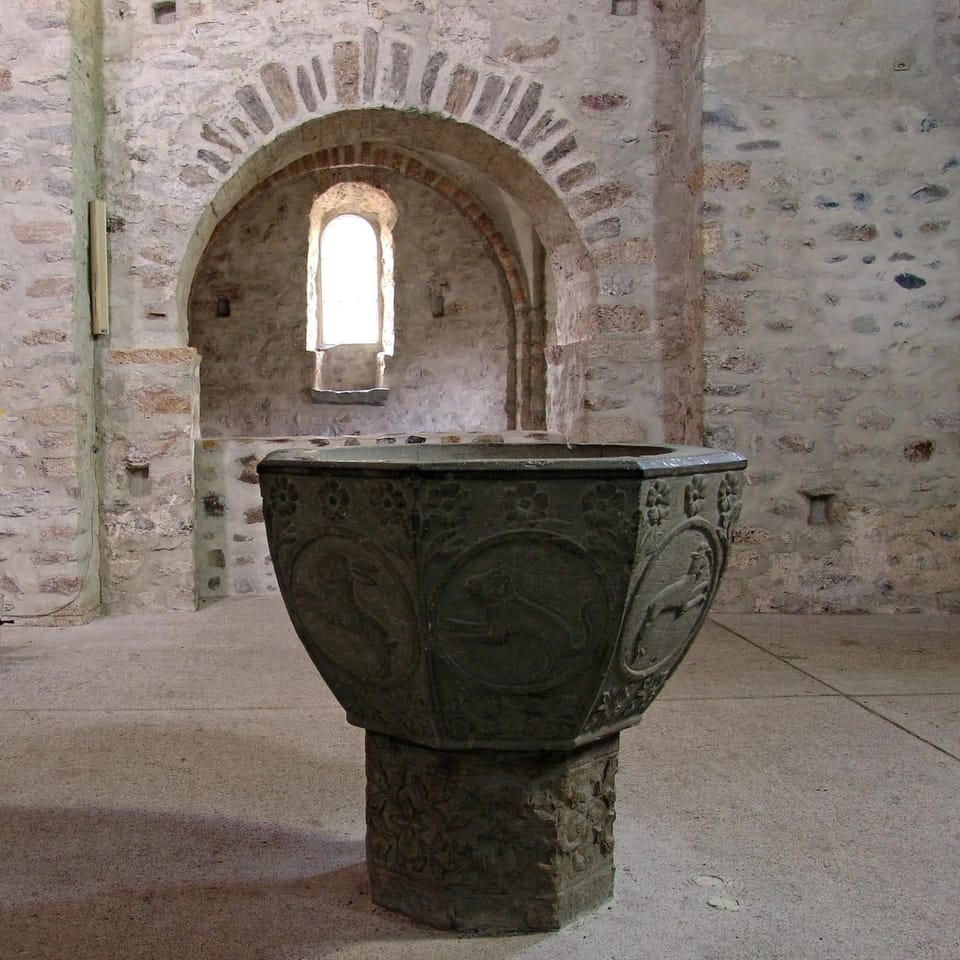
This year on Pentecost, I will celebrate the thirtieth anniversary of my baptism.
I was twenty-five years old when I was baptized. I was in my final year at Harvard Divinity School. Those days, I was becoming a minister in the Unitarian Universalist Association.
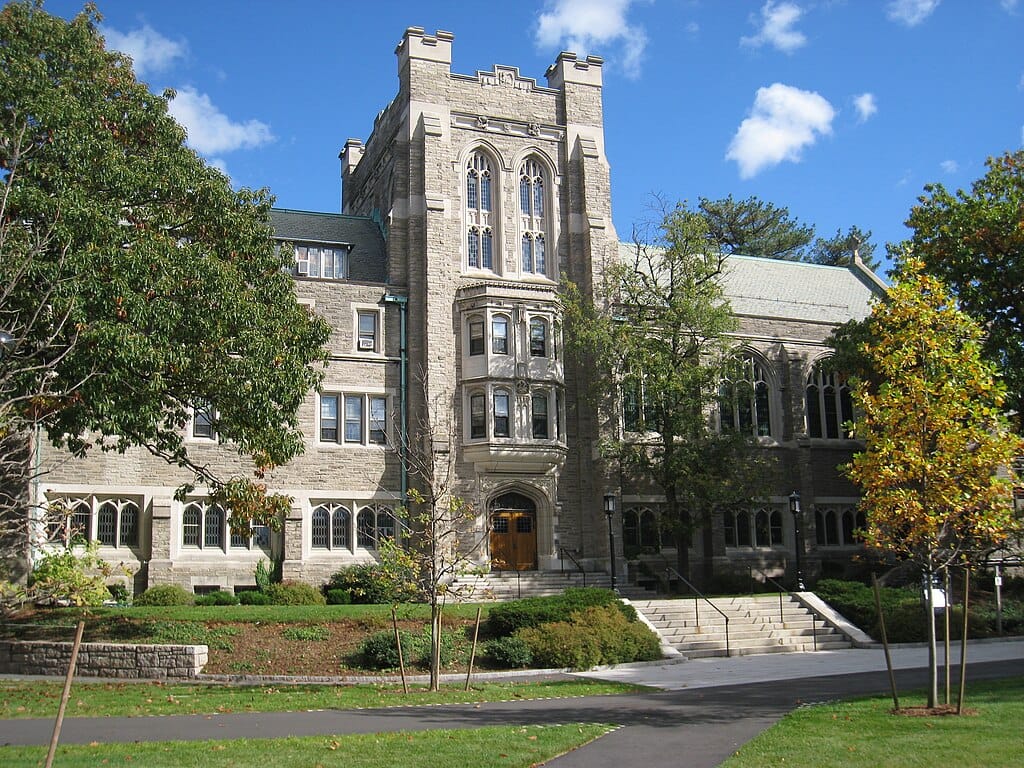
Becoming a Christian while also becoming a Unitarian Universalist minister was the riskiest career choice I have ever made.
In 1996, the Unitarian Universalist Association was a place where Christians were more welcome in theory than in practice.
When I started the UUA’s ordination process at twenty-two, I wasn’t yet a Christian. I was eligible to serve any of the thousand churches it included.
Then I became a Christian and stayed a Unitarian Universalist. It made me a good fit for only twenty of those churches.
I was on my own, and there were bills to pay. I didn’t know how I would live if I didn’t get a job. But I decided that part of being a Christian was trusting God to work that out.
God did work it out. I was called to serve a small group who wanted to plant a Christian church in the Unitarian Universalist Association in Fenton, Michigan. I moved to Michigan in 1997 to do this work, not long after I was ordained.
It is one of the many miracles on which my present life depends. I will always be grateful.
I chose to be baptized because I felt lacking in wisdom. What was the point of being a minister if I didn’t have the wisdom I needed to make a difference for others?
I knew God had called me to ordained ministry, but being called is not the same as being equipped. Harvard was great intellectually. But spiritually, I needed more.

I trusted that in the ancient tradition of Christianity, I would find wisdom.
I knew that I had to practice this faith. I couldn’t just mine it for insights as an outsider. I had to belong to it and let it live in me. I needed to belong to the other people who also belonged to it. I trusted that over time this would change me, and I could make a difference for others.
That was my theory at twenty-five. Thirty years later I thank God, because that proved true. I have learned so much… and there is so much still to learn.
Over the last thirty years, I have thought a lot about the meaning of baptism and belonging. One blog post can't capture it all, but it can be a beginning.
A long time ago, we are told, God made a garden called Eden. Adam and Eve were given it as their home. There was enough to eat. All was well and whole.

But our first parents went beyond their human limits. They decided to try to be more like God. They took forbidden fruit.
The story tells the truth in a way that only stories can. It helps us see ourselves.
I learned back at Harvard that in the Jewish world, this is a story about growing up. The Garden of Eden was like kindergarten, Dr Jon Levenson taught. No one stays in kindergarten forever.
As a Christian I have come to see this as a story about what I inherit. Our lives – as individuals, as societies – begin in the lives that came before us.
And from the beginning, people have chosen unwisely.
When Jewish Farm School founder Nati Passow teaches about this story, he says God wants us to “just show a little restraint.”
But we don’t show restraint.
We reach for the fruit. We reach for the power, the money, the land, the fossil fuels, the automobile, the electric light, the space shuttle, the computer, and now AI.
I say this about myself too. There are cars in my driveway. I am writing this on a screen.
We reach too far in part because those who came before us reached too far in their time.
The whole big story of Scripture is God trying again and again to set humanity right.
Finally God shows up in person. Nothing else has worked!
Centuries after the story of Adam and Eve, Jesus is born.
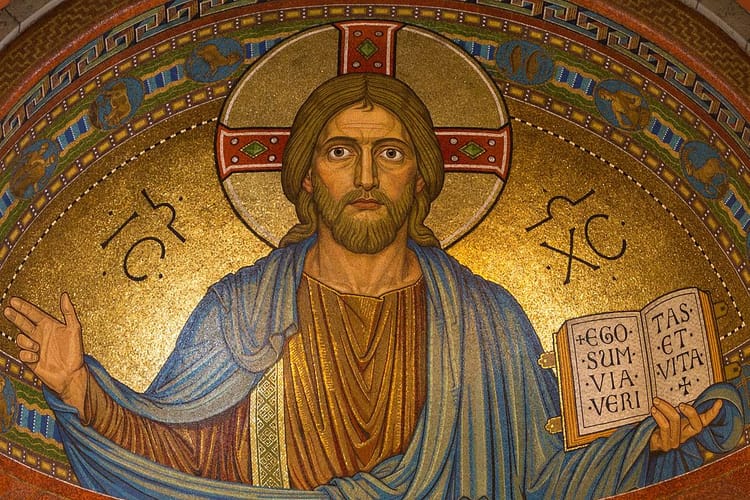
Scripture skips over almost all his early life. His ministry begins when he is baptized by John in the Jordan.

At first, John wants to stop him. “Wait a minute,” John says, “I need to be baptized by you!”
But Jesus feels the need for John’s baptism. It’s the right thing to do for good order, he says. So John baptizes him.
Jesus being baptized sets a precedent. Because Jesus was baptized, he could tell others to be baptized, just as he was.
He went first. His followers came after.
And after, and after, and after for millenia... including me.
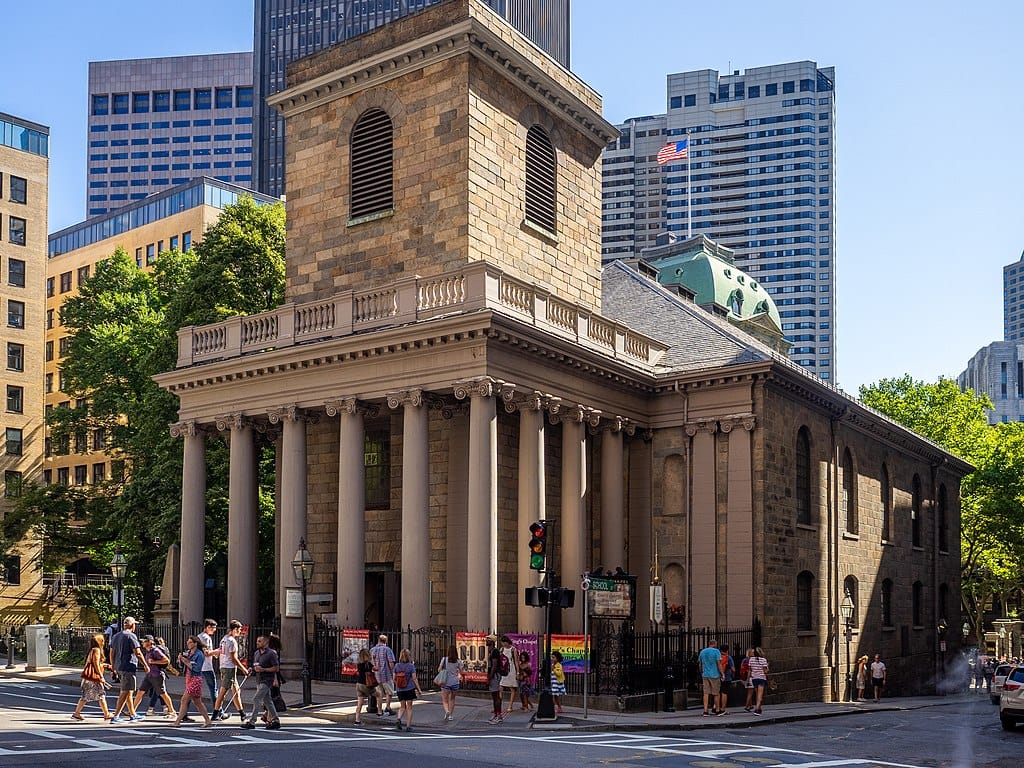
When I wanted to be baptized, I called the Rev. Carl Scovel at King’s Chapel in Boston. I asked to join his Lenten baptism preparation class.
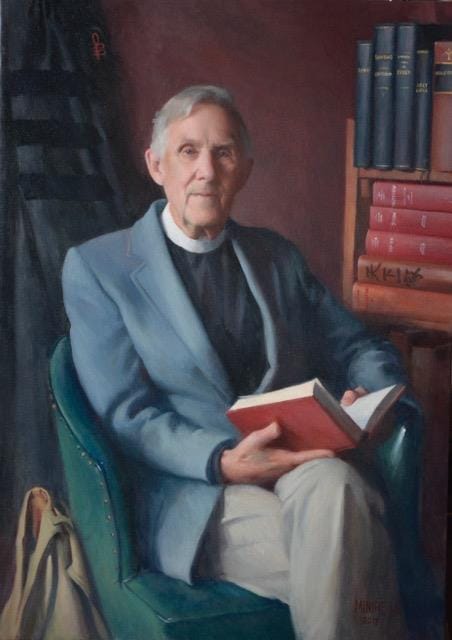
This was unusual, because I didn’t go to his church. My church didn’t have a baptism preparation class, though. King’s Chapel did.
King’s Chapel was founded by the Church of England in the American colonies. It became Unitarian in the 1800’s. By the 1990’s, it was the unofficial Christian cathedral of the Unitarian Universalist Association.
“Why do you want to come to baptism preparation at King’s Chapel?” Carl asked. He asked it kindly and with curiosity. We had never met. It was a fair question.
“The Bible says that baptism means I die and am raised with Christ,” I said, with all the seriousness of a young adult seminarian. “That sounds dangerous. I thought it would be better to get ready with other people.”
I’ll never forget Carl’s response: “My goodness, you’re taking this seriously!”
I understand his surprise. Often, clergy perform pro forma baptisms for the sake of family custom. An adult convert showing up who understands what they are getting into is very unusual. In thirty years of ordained ministry, I myself have only had this happen once.
But of course I was taking my baptism seriously.
I knew the world I lived in was broken. That was already clear.
And I knew that baptism promised me a new beginning.
When Jesus is baptized, he hears God call him “beloved.” In baptism he experiences belovedness and belonging. Then he practices belovedness.
Jesus tells the truth, even when it is hard to hear. He feeds the hungry. He heals the sick. He teaches the people. He even rises from the dead.
He acts just like you would expect God to act if you knew that God was love.
What I have learned after thirty years of baptism is that we are meant to belong on this earth as God’s beloved.
Not because we deserve it. Not because we earned it. Not because of anything we have to do.
We belong to this belovedness because God made us for belovedness.
Belovedness is hard to remember when the news delivers a different horror every day.
But baptism is the doorway into eternal belovedness, eternal belonging.

It turns out it really works to die to your former self and be raised with Christ.
In baptism we die to the lies of the world. We begin again through the grace of God.
In this broken world, we the baptized are meant to practice belovedness. We are meant to model belonging.
All life springs from one source. That source is the endless mystery of God.
When Jesus says at the end of Matthew’s gospel, “go make disciples of all nations” he means “go teach everyone that they belong to God. Baptize them so they have a wellspring of new life within them – the wellspring of God’s life connecting them to all Creation.”
I’ll say it again: In this broken world, we the baptized are meant to practice belovedness and model belonging. We learn this from Christ our Lord.
We are broken beings and our ancestors were broken beings.
We cannot go back and heal the brokenness of those who came before us. We can only go forward. That’s how time works.
The call we receive in Christ is more urgent now than ever. How we move forward really matters.
Today, and every day, I recommit to my baptism.
It remains the best choice I have ever made.


Member discussion