Voting works fine in Michigan. Here's how I know.
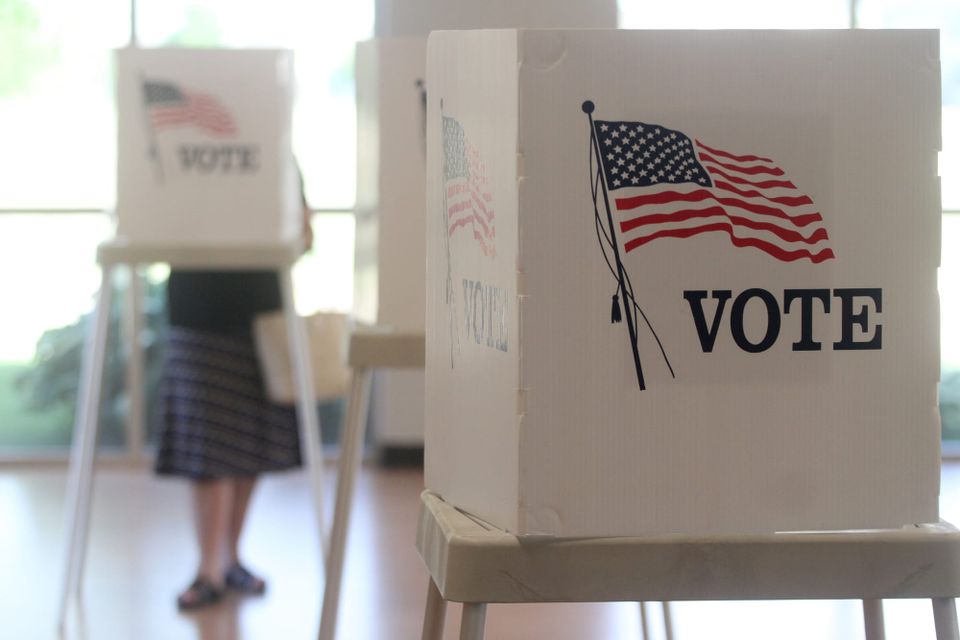
Last year, when Harvard University's tax-exempt status was threatened by the current federal government, alumni paid attention. Over email, I discussed the situation with another Harvard alum, a lawyer and friend.
"In terms of what matters most," he wrote, "I think the focal point is probably voting. Attacks on election results and the suppression of voting is the only way the current terrible trends will be able to continue. I recommend that you go to the website of the League of Women Voters."
His advice is consistently excellent. I joined the League of Women Voters that day.
Last month, the League asked for volunteers to attend public voting machine tests.
What was a public voting machine test? I had no idea, but I was curious. So I signed up for a slot at 8am in East Grand Rapids.
Is it the most highly contested voting location? Absolutely not.
Is it in a location and at a time that worked for me? Yes it was.
I could get in and out before work, and that mattered. Going to a public voting machine test (and writing about it) was something I was doing on my own time.
Before I joined the League, I had no idea that public voting tests even existed. But it turns out they are required by Michigan law.
In the public voting test, the same public servants that run the actual election take the time to test and explain the machinery for the election in public.
Michigan requires both paper ballots and machine counting. During public voting machine testing, elected officials confirm that the machines work in public where anyone can ask questions and verify their accuracy.
Michigan has a very decentralized election system. There are 1604 people across the state responsible for administering elections.
What I discovered is that these are ordinary people doing extraordinary jobs.
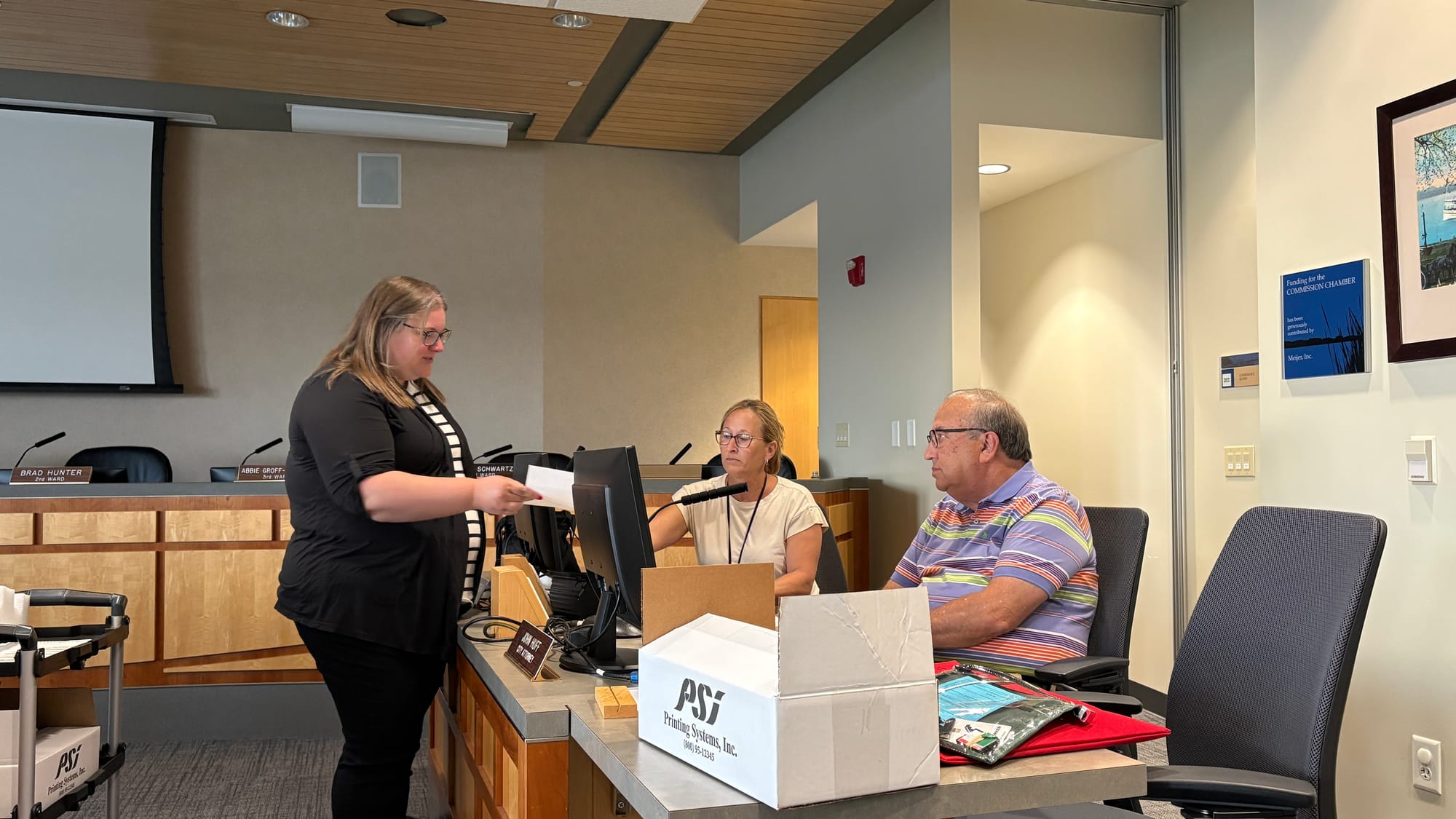
Here, the city clerk and elections commissioners convened for the public test. As they began, they convened a meeting of the board of elections commissioners.
It reminded me of the countless church meetings I have convened and attended.
Was there a motion to approve the agenda? Yes, there was.
Was the agenda approved? Yes, it was.
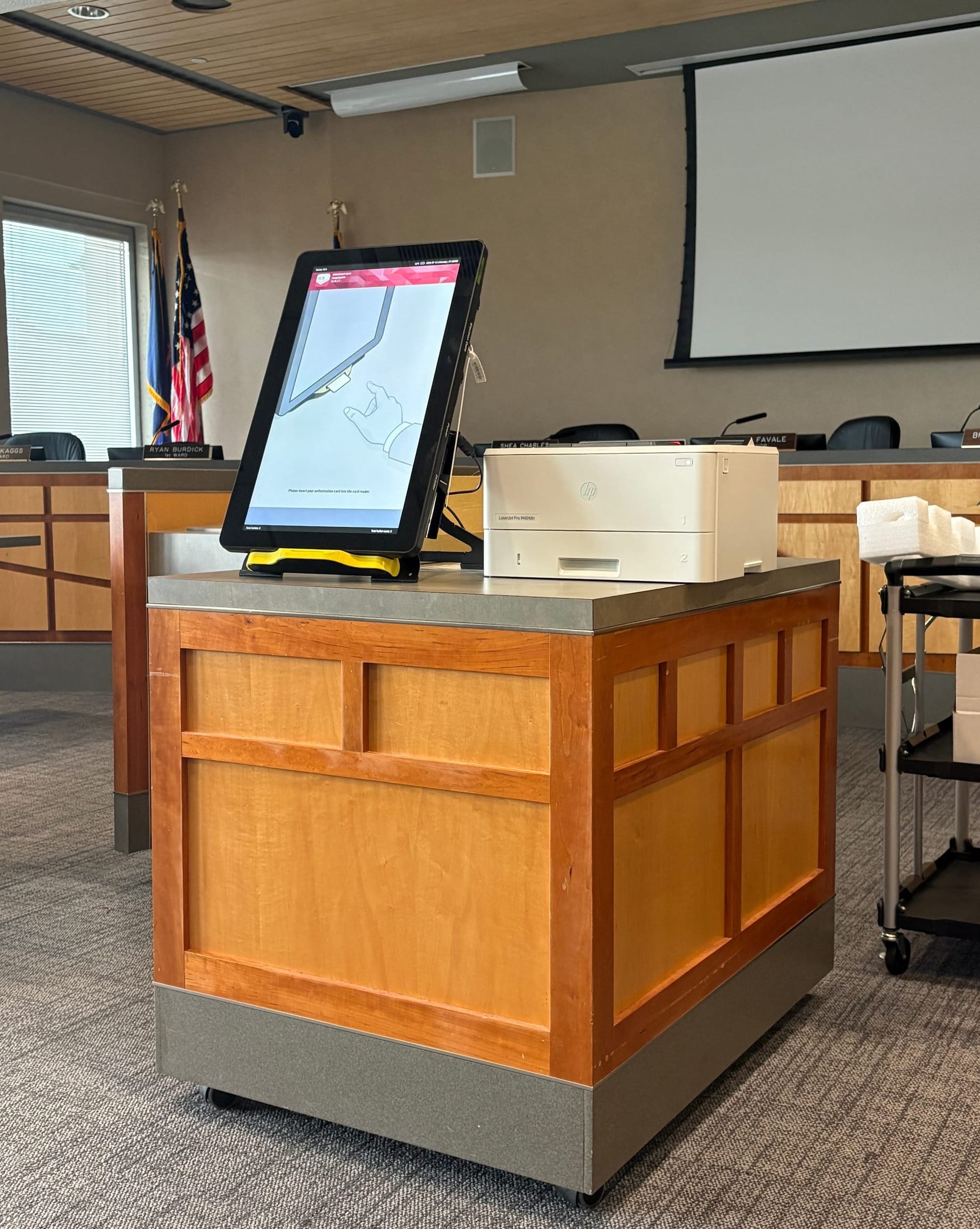
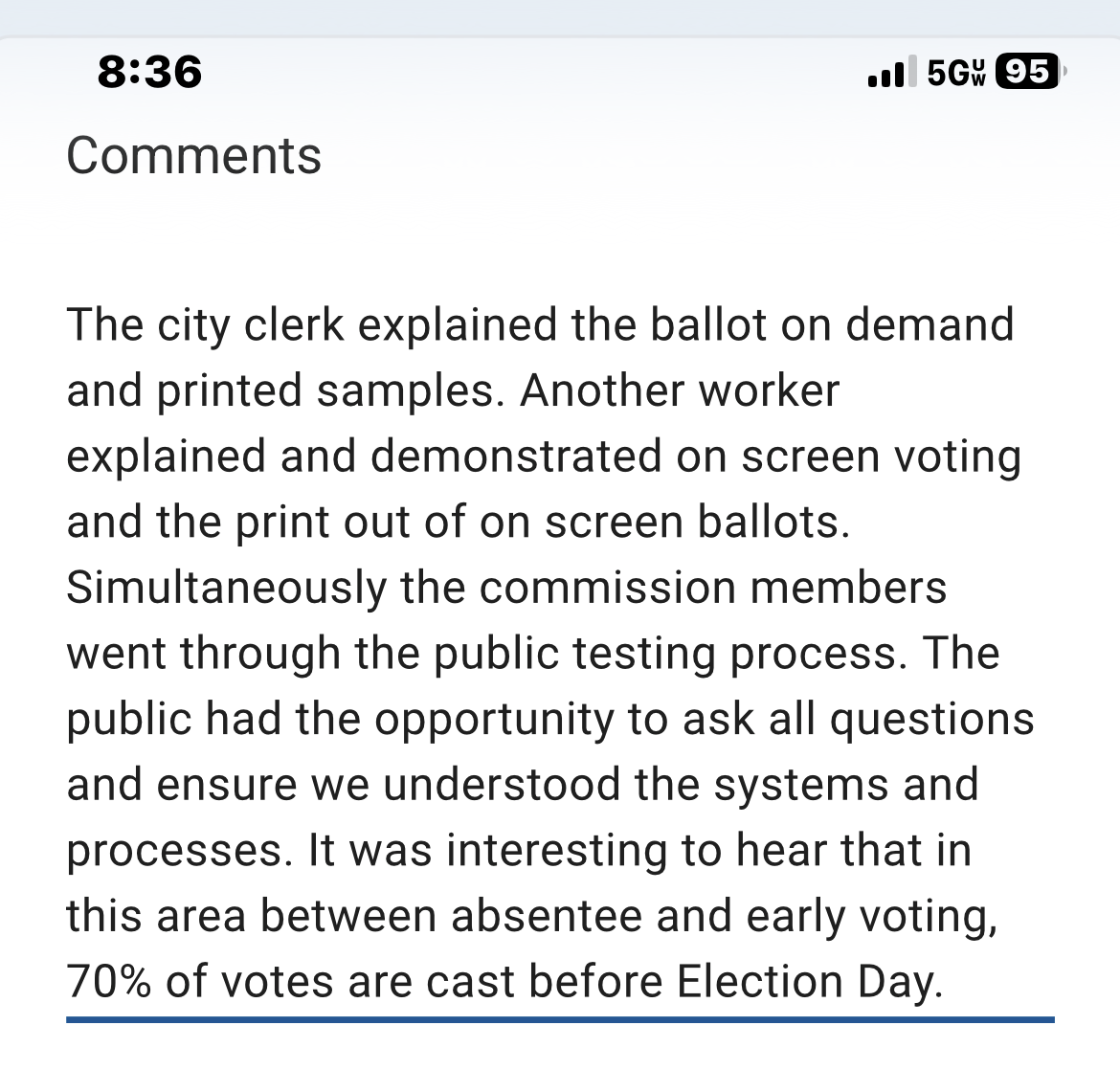
East Grand Rapids has a ballot Print on Demand system. There are multiple precincts in the city, each with a slightly different ballot. Print on Demand ensures that the correct number of ballots are printed every time, with no waste. All of this was explained and demonstrated.
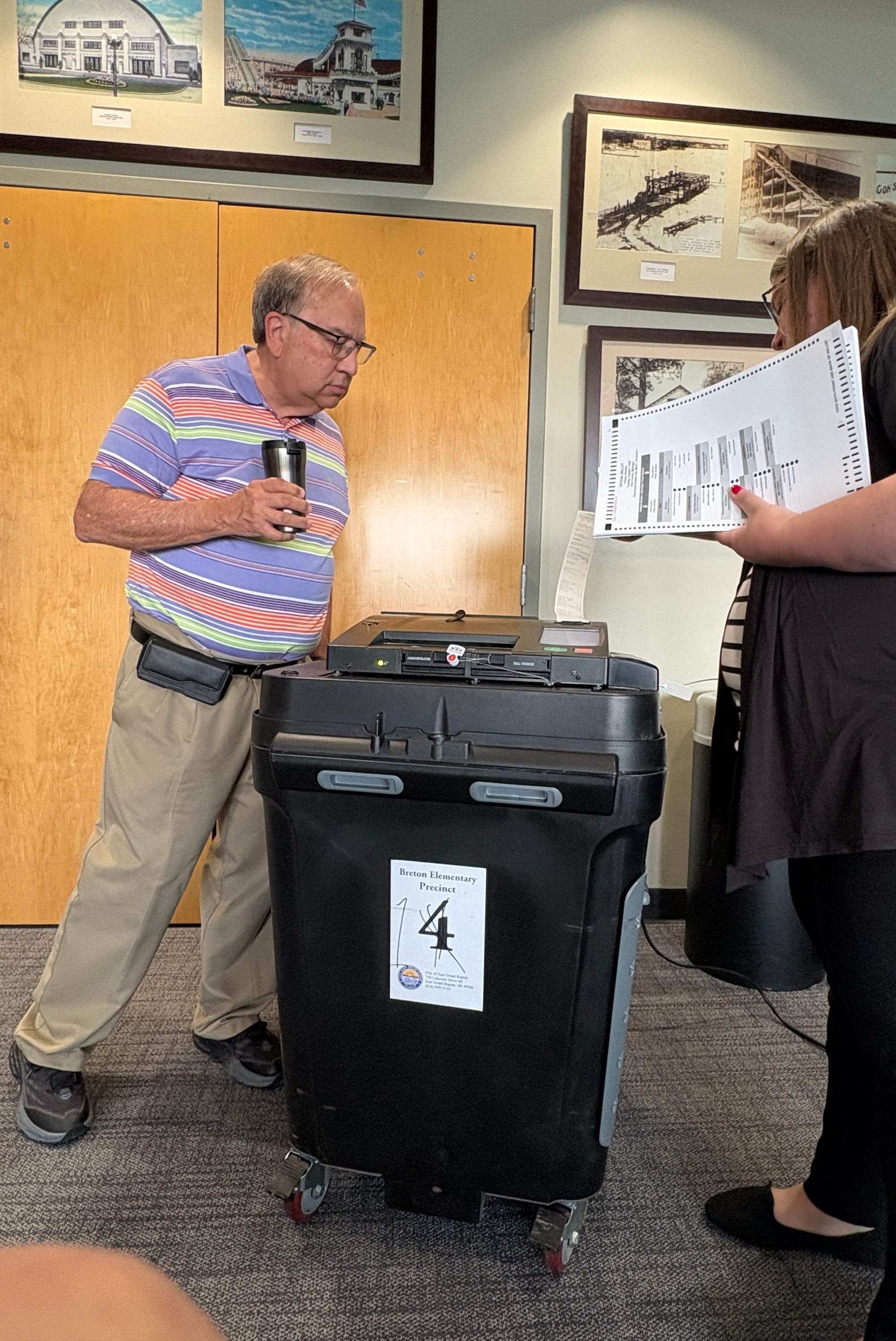
I watched as the Board of Election Commissioners reviewed the previously marked ballots. They double checked that the results counted by the machine were the same as the results they counted by humans.
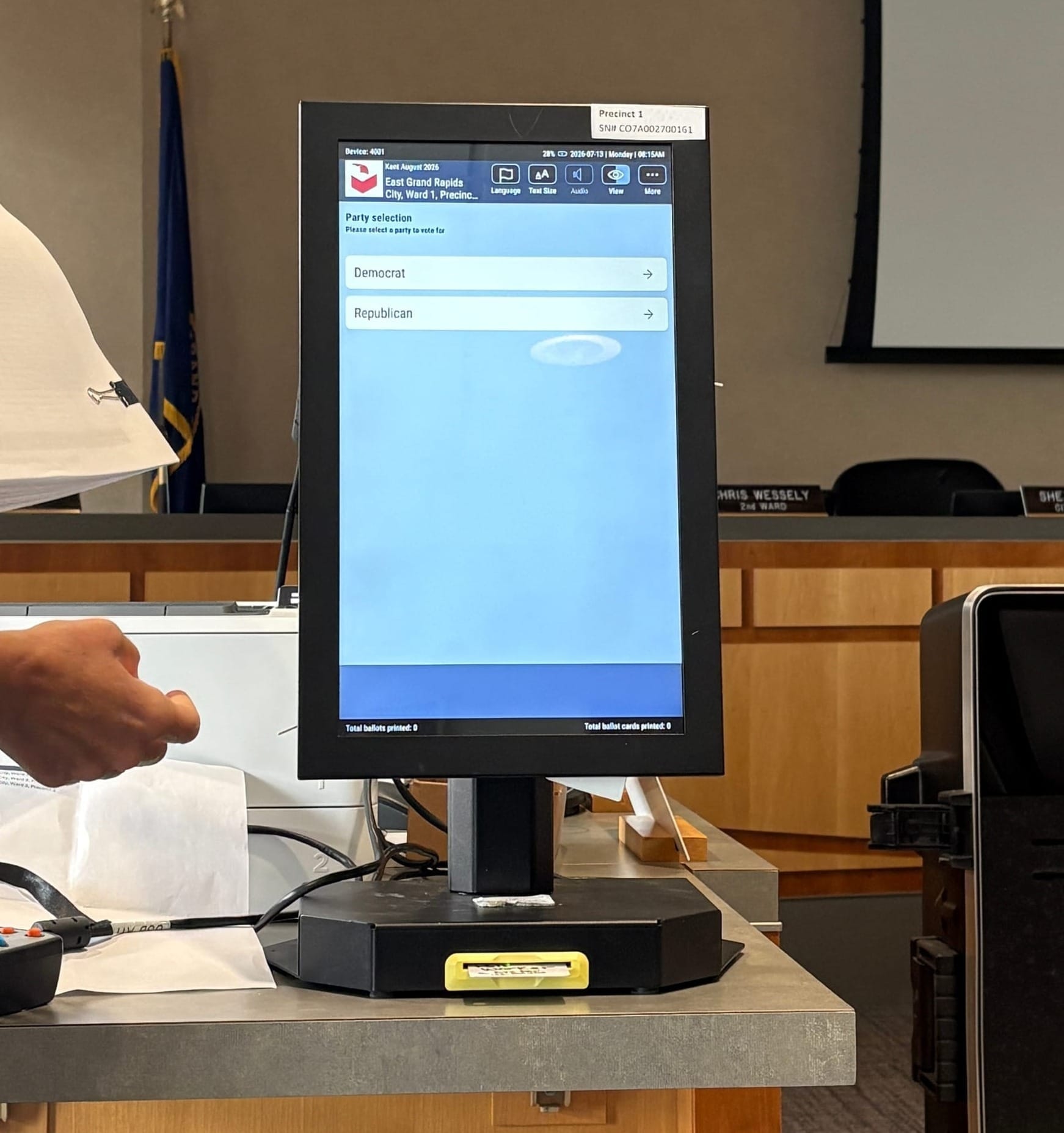
I also saw the on-screen voting process. After a person votes on-screen, they receive a print out of their vote and can check it for accuracy before it is tabulated. On-screen voting is offered as an option, but not required. People sometimes prefer it when lines are long, because it is quicker than filling ballots in by hand.
When the testing was complete, I filled out the Google form for the League of Women Voters.
Before I left, I talked with the other League member... it turned out that we had a personal connection through a Plainsong Farm alum now employed by her church!
And then, I went to work.
My takeaway: In Michigan, elections are working just fine!
In Michigan, we are legally required to vote using paper ballots. These can be counted as many times as is needed if there are questions after the first count.
In Michigan, we use legally required to use machine tabulation. This is more accurate than human counting (as a human, I lament this, but I know it is true).
In Michigan, we require vote counting machines to be publicly tested, so anyone can see how they work.
And in Michigan, as in all other states, we only allow citizens to vote. This is already the law! Voting as a non-citizen is a felony.
I went to public voting machine testing because I am concerned for American democracy.
Democracy means government of the people, by the people, and for the people.
As a small child, I learned that democracy meant everyone had an equal right to a voice and a vote. Democracy was fairness in practice.
I remember voting as a child in elementary school. I put my head down on my desk and hid my eyes with one arm. I put my other hand in the air to vote. I trusted my teacher to count the hands accurately, and report the results.
Whether my side won or lost, I liked the process. It made sense to me.
Later today, President Trump will make a speech about voting in America.
He is the current president because people voted for him. In free and fair elections.
But the Constitution says that the United States of America are constituted by "We the People."
"We the people" have to stay engaged if we want democracy to work.
For a long time, I was afraid of getting involved in democracy.
In a polarized country, I didn't want to be divisive. And I didn't want to be partisan.
I appreciate different leaders within both political parties. Both Democrats and Republicans are in every church I have ever served. I was nervous that if I engaged in anything political, I would alienate somebody.
But it turns out that what I care about is preserving voting rights.
Everybody needs those.
Elections where eligible voters can vote is foundational to how our country works.
In Michigan, it seems to me that we have elections that work.
I plan to keep it that way.
I'll keep writing about my engagement in this election cycle.
You're invited to subscribe and comment to share the journey.


Member discussion